
Website Design in Kathmandu — What It Costs in Year One, How Long It Takes, and What You Own at the End
I’m Prakash Kushwaha. I’ve been building websites for more than eight years, and for most of that time I’ve also been the person who has to make them rank afterwards. That second part changes what gets built, and it’s most of what this page is about.
Most pages offering website design in Kathmandu will show you a gallery and ask you to fill in a form. Below instead: what a site costs across its first year rather than just the build, why the quotes you’re holding vary so wildly, how long it takes week by week, and what’s in your name when it’s finished.
How I Work
Every quote you’ll receive is for the build. That is not what you will spend.
The build is a one-off. Hosting, the domain, the SSL certificate and any maintenance are annual, and they start the month you launch. Not one of the website design pages I read while writing this puts them beside the design fee — the pricing guides itemise them, the people selling you the site don’t — so business owners budget for one number and meet four.
Here’s the whole picture, using the going rates in Nepal as of September 2026:
- Domain — a
.comruns about NPR 1,200–2,000 a year. A.com.npis free or close to it, which is a better deal than most Nepali businesses take advantage of. - Hosting — shared hosting is NPR 3,000–8,000 a year and is enough for most business sites. VPS starts around NPR 12,000 and you probably don’t need it yet.
- SSL certificate — the standard kind is free and included with any decent host, and it’s all a normal business site needs. Paid certificates exist and run NPR 5,000–15,000 a year, but unless you’re handling card data directly you’re unlikely to need one. Worth asking what you’re being charged for.
- Maintenance — optional, but budget something. A WordPress site nobody updates will eventually be compromised through an outdated plugin, and cleaning that up costs more than a year of maintenance.
- The build itself — see below.
Against that, the build. And the build price depends almost entirely on one decision that most business owners don’t know they’re making.
Static, CMS or dynamic — the decision that sets your price
Three kinds of website get sold in Nepal, they cost very different amounts, and the difference is rarely explained before the quote arrives. Worse, the type is usually chosen for the builder’s convenience rather than your needs. So here it is plainly, because once you know which one you need, website design price in Nepal stops being a mystery.
Static — the fastest and the cheapest, and right more often than it’s sold
A static site is built as fixed pages. Nothing is assembled when a visitor arrives, so it loads almost instantly, there’s no database to break into, and there’s nothing to update. The trade-off is real: you can’t edit it yourself. Every text change comes back to whoever built it.
Right for: a business with five or six pages that won’t change much — a dental clinic, a law office, an accountancy practice, a workshop. If you’ve changed your current website twice in three years, this is you.
Market range: published guides put static sites at roughly NPR 5,000–40,000, depending on how many pages and how much design.
Worth knowing: the pricing guides discuss static sites at length. The companies actually selling website design in Kathmandu don’t offer one — I checked five of their service pages and static isn’t on any of them. It produces the smallest invoice and no maintenance revenue, which is probably why. It produces the smallest invoice and no maintenance revenue, which is probably why. It is also the fastest-loading option there is, and on a 4G connection that matters more than anything on a feature list.
CMS — WordPress, and where most Nepali businesses belong
A CMS gives you an admin panel. You log in, change text, swap an image, add a page or a blog post, and publish. This is WordPress in almost every case, and for good reason: you’re not locked to the person who built it, and finding someone else to maintain it is easy.
The trade-off is upkeep. Core and plugin updates have to happen on a schedule, because an outdated plugin is the usual way a WordPress site gets compromised — and every plugin you add costs you load time.
Right for: anyone with services that change, prices to update, a blog, or more than one person who needs to edit the site. This is the honest answer for most businesses asking about website design in Nepal, and it’s what I build most often.
Market range: roughly NPR 13,000–100,000, from a lightly adjusted template at the bottom to a fully custom design at the top. That range is wide because “WordPress site” covers both.
Dynamic — when the site has to do something, not just say something
“Dynamic” is the word that causes the most confusion, partly because a CMS is technically dynamic too, and partly because it gets used to justify a higher price for something WordPress already does.
Genuinely dynamic means the page is generated per visitor from live data — customer logins, a booking calendar that shows real availability, a dashboard, stock that updates itself, a portal where each user sees their own information. If your requirement is “customers should be able to log in and see their orders”, that’s dynamic. If it’s “I want to add news posts”, that’s a CMS, and you should not be paying dynamic prices for it.
Market range: a dynamic business site sits around NPR 25,000–150,000; a genuine web application starts near NPR 300,000 and has no real ceiling.
The test worth applying: ask any provider quoting you a “dynamic website” exactly which parts of it change per visitor. If the answer is a contact form and a news section, you’re being quoted for a CMS.
And an online store is its own category
WooCommerce on WordPress, typically, with eSewa or Khalti wired in. Published ranges run from about NPR 35,000 for a basic catalogue to NPR 300,000 for multi-vendor. Budget more time than you think: product data, shipping rules and payment testing are where store projects actually go over.
What I charge
I couldn’t find many website designers in Kathmandu who put the build price and the ongoing costs clearly in the same place, so here they are together:
- Static site — from NPR 20,000 — up to 5 pages, responsive design, contact form, basic on-page SEO, speed optimisation and mobile testing.
- WordPress / CMS site — from NPR 45,000 — up to 8 pages, WordPress CMS, responsive design, blog setup, contact forms, basic SEO structure, analytics and Search Console setup, and training so you can update the site yourself.
- WooCommerce store — from NPR 75,000 — WooCommerce setup, up to 30 products, cart and checkout, product categories, order management, payment gateway setup, basic technical SEO and mobile optimisation.
- Dynamic / custom builds — quoted per project — booking systems, membership areas, dashboards, APIs and functionality that needs custom development are scoped and priced separately.
Every build includes domain and hosting setup in your name, SSL setup, mobile-responsive development, SEO-friendly site structure, basic speed optimisation, analytics and Search Console setup, testing before launch, and a handover session showing you how to manage your site.
Domain, hosting, premium themes/plugins and ongoing maintenance are charged separately, so you know what you’re paying for upfront and what you’ll need to renew later.
Why the same "business website" is quoted at NPR 25,000 and at NPR 500,000
Ask what website design price in Nepal actually means and you’ll get answers an order of magnitude apart. Mostly it’s the three types above being sold under one label. But not entirely — I went through every pricing guide currently ranking for website design in Nepal, and even within a single type the published figures disagree wildly. One guide puts a business website at NPR 50,000–200,000; another at NPR 25,000–45,000; a design company on the first page of results puts professional agency work at NPR 200,000–500,000.
Two more things drive that gap once the type is settled. Design origin — a template with your logo dropped in is assembly, and you should pay assembly prices; a design built from nothing is worth it when the brand is the product, like a hotel or a studio, and rarely worth it for a plumbing company. And who does the work — on the published figures, the same brief costs two to three times less from an individual than from an agency, because you aren’t paying for an account manager.
So before you compare two quotes, establish three things about each: which type it is, whether the design is template or bespoke, and who will do the building. Two proposals at NPR 40,000 and NPR 140,000 may both be fair prices for different things — and the cheaper one may be the right buy.
What you own when it's finished
It matters more here than anywhere. A website is an asset you’re commissioning, and there are three ways to end up not owning it: the domain gets registered in the builder’s name, the hosting account belongs to them so moving means rebuilding, or the site is built on a proprietary platform you can’t take anywhere.
How I do it: the domain is registered in your name, the hosting account is yours with your card on it, and the site is WordPress. You get the logins on day one, not at handover. If you decide next year that you’d rather someone else looked after it, you send them the credentials and they get on with it. Nothing about the site depends on me still being involved.
Ask anyone you’re considering those three questions before you pay a deposit. “We’ll handle all of that for you” is not an answer.
Built by the person who has to rank it afterwards
This is the part that separates me from the companies you’ll be comparing me against, and it isn’t about design.
Most web projects in Nepal are sold as a build, then someone else inherits the SEO problem six months later. I’ve been that someone else many times, and the pattern is always the same: a site that looks fine and is structurally incapable of ranking. One “Our Services” page carrying six services that should have been six pages. Headings chosen because of how big the text looked. Every page titled “Home | Company Name”. A homepage slider that pushes the actual content below three scrolls.
None of that is a design failure. It’s a decision failure, made at the wireframe stage by someone who was never going to have to live with it. When the same person does both jobs, the page structure gets settled before the design starts — one page per thing you sell, a heading hierarchy that means something, and titles written for searches rather than for the nav bar.
You still need actual SEO work afterwards; a well-built site doesn’t rank by itself. But you start from a site that can, rather than paying someone to undo the first build. And if you need customers before organic search can deliver them, Google Ads is the honest bridge — a new site plus a small ad budget beats a new site plus waiting.
Speed isn't a feature, it's the requirement
Every competitor page in this field says “responsive”. Not one of them mentions how fast the site loads, and those are different claims. Responsive means the layout doesn’t break on a phone. It says nothing about whether the page arrives.
Most of Nepal browses on mobile data. Your site is judged on a 4G connection in a shop in New Road or on a bus down Gongabu, Satdobato or Kalimati, not on the wifi in your Kathmandu office. A design that feels snappy when you review it can take eight seconds for the customer who matters. Those are the seconds where people go back to the results page and click your competitor.
So: images compressed and correctly sized rather than uploaded at camera resolution, a page built with the number of plugins it needs rather than fourteen, fonts that don’t block the first paint, and a real check on a real phone on mobile data before launch. I’ve written up why this matters for both rankings and revenue if you want the longer version, and the technical checklist I work through.
Sites I've built
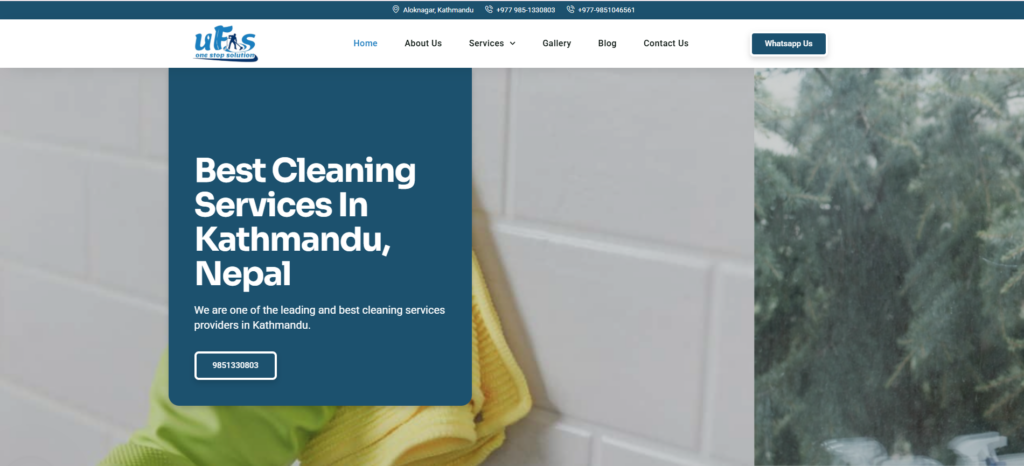
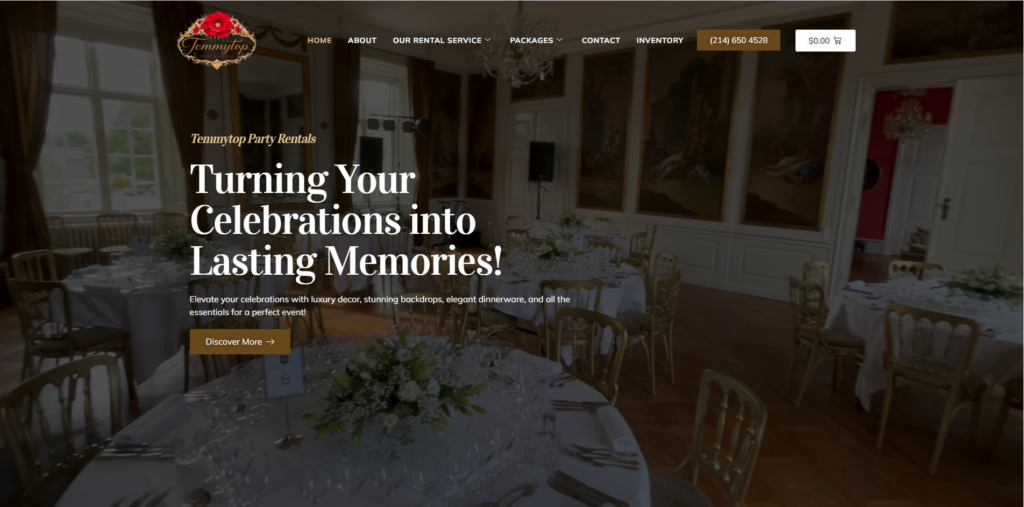
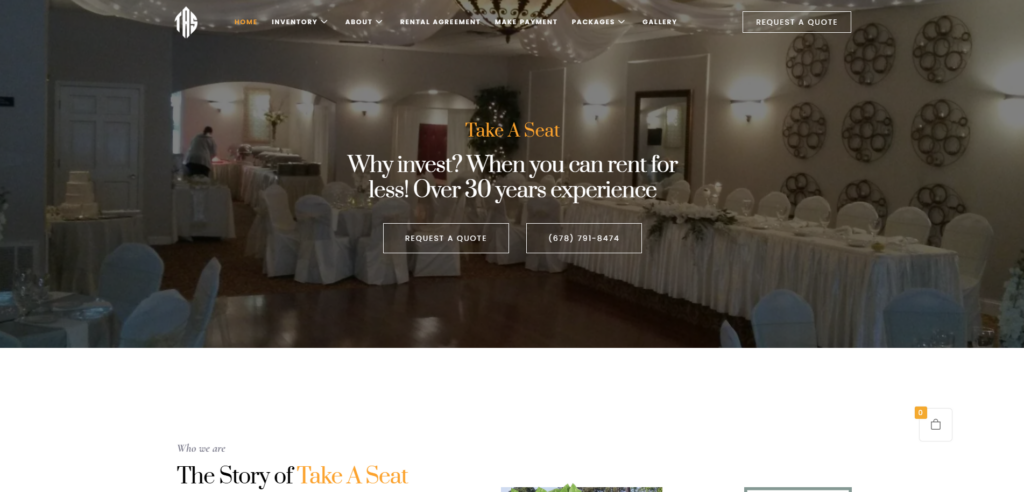
All live, all still running, and all named — because a portfolio of unnamed thumbnails proves nothing. One is here in Kathmandu; the rest are in the US and Canada, which is its own kind of evidence about what these sites have to stand up to. Click any of them and judge for yourself.

More of IT Arrow’s project write-ups are on the company portfolio page.
What Clients Say — Reviews from Kathmandu and Abroad
How long it takes
The companies selling you a website mostly won’t commit to a timeline. The pricing guides will — one puts a business site at two to six weeks, another breaks it down from five days for a static page to 180 for a custom application. Useful ranges, but nobody’s promising them to you. Here’s mine, and it’s a commitment rather than a range.
Week one — structure and content
Working out what pages exist and what each one is for, before anything is designed. This is also where I ask you for the content, and where most projects actually stall — not on the design, on waiting for the text and the photographs. If you have those ready, the whole thing moves faster.
Weeks two and three — design and build
You see the homepage first and we settle the look on that before the rest follows, so you're not reviewing twelve pages of something you don't like. Then the interior pages, the structure, the speed work.
Week four — testing and launch
Real phone on mobile data, forms tested end to end, Search Console and Analytics connected in your name, and a handover session where I show you how to edit the thing.
Three to four weeks for a normal business site, assuming content arrives. A store or anything with bookings takes longer and I’ll say how long before we start. Anyone quoting a week for a real business site is using a template, which is fine — but you should know that’s what you’re buying.
What I won't build
I don’t take on true web applications — booking engines with live availability, marketplaces, anything with customer logins and business logic behind them. That’s a different discipline from the one I’m good at, and Nepal has capable development shops for it. I’d rather point you at one than learn on your budget. If what you actually need is a CMS with a contact form, though, say so and we’ll save you the difference.
And I won’t rebuild a site that doesn’t need it. Plenty of the sites I’m asked to replace are structurally sound and badly organised, which is a cheaper problem — reorganise the pages, rewrite the ones that matter, fix the speed, keep the site. Saying so costs me a build and saves you most of a budget, and it’s the right answer more often than this industry finds convenient.
Let’s Grow Your Business
Need more traffic, leads or sales? Tell me what you’re working on and I’ll recommend the right approach — SEO, Google Ads or website improvements.
Questions I get asked
Do you handle the domain and hosting?
Yes, and I set both up in your name with your payment details on them. I’ll recommend a host, register the domain, configure email and handle the technical setup — but the accounts belong to you from the first day, not from handover.
Will I be able to update it myself?
That’s the point of building on WordPress. Text, images, new pages, blog posts — all editable without touching code, and the handover session covers exactly how. If you’d rather not, maintenance is available, but it should be a choice rather than a dependency.
Is SEO included, or extra?
The structure is included: one page per service, a sane heading hierarchy, titles and descriptions written properly, clean markup, speed. That’s the foundation and it isn’t an upsell. Ongoing keyword research, content and link work is a separate monthly service, because it’s a separate job.
Can you build an online store?
Yes — WooCommerce, with Nepali payment gateways like eSewa and Khalti integrated. Budget more time and more money than an informational site: there’s product data, shipping rules, payment testing and a lot more that can break.
How many revisions do I get?
As many as it takes to get the pages we agreed right. What needs a new quote is a change of scope — deciding mid-build that you also want a booking system, or replacing an approved design because someone’s cousin didn’t like the colour. I’ll tell you which side of that line a request falls on when you make it, not in an invoice afterwards.
Which type do I need — static, CMS or dynamic?
Answer one question: how often will you change the site yourself? Never or almost never, and a static site is faster and cheaper. Monthly, or you want a blog, and it’s WordPress. Only if customers need to log in and see their own information does it become genuinely dynamic — and that’s a much bigger budget. I’ll tell you which one you need in the free audit, including when the answer is the cheapest option.
What if I already have a website?
Send me the URL. I’ll tell you honestly whether it needs replacing, restructuring, or just speeding up — and the free audit covers that. A rebuild is the most expensive answer to most website problems and it’s the right one less often than you’d think.
Can you build a site for a business outside the valley?
Yes. Website design in Nepal doesn’t require sitting in the same room — I work with businesses in Pokhara, Biratnagar, Birgunj, Chitwan and Butwal by phone, WhatsApp and email. If you’re in the valley and would rather meet, I’d prefer that too.
Start by sending me the site you have
If you already have a website, send me the link and I’ll tell you what’s wrong with it — including if the answer is “not much”. If you don’t have one yet, tell me what your business does and I’ll tell you what it needs and roughly what that costs.
No charge either way, and no obligation at the end of it. That’s a more useful first step than a quote, because the honest answer to “how much is website design in Kathmandu” depends entirely on what you already have. Get in touch, or see what the free audit includes.
- Kathmandu, Nepal
- +977 9801060076
- [email protected]
- Mon–Fri, 8:00 PM – 7:00 AM NPT